
October 29, 2026
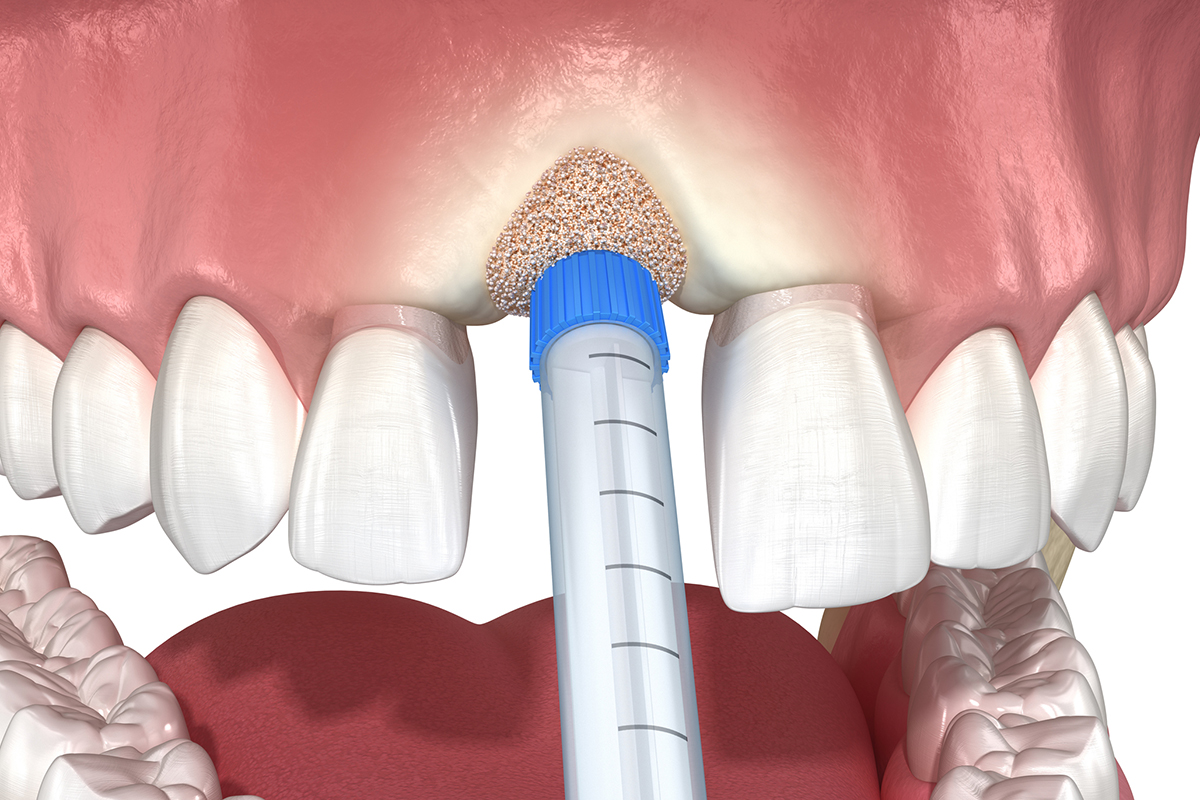
When we talk with patients about dental implants, the conversation often turns to bone. Implants are remarkably strong and long-lasting, but they depend on a healthy, sufficient foundation of jawbone to succeed. If that foundation has thinned or shrunk over time, we may recommend a preparatory procedure before your implant is placed. Two of the most common options are bone grafting and a sinus lift.
Many patients hear these terms used together and wonder whether they are the same thing. They are closely related, but they are not identical. In this article, we explain what each procedure involves, how they differ, and how we decide which one is right for you.
Why Bone Volume Matters for Dental Implants
A dental implant is a small titanium post that replaces the root of a missing tooth. Once placed, it fuses with the surrounding jawbone through a process called osseointegration. This bond is what gives implants their stability and allows them to support a crown, bridge, or denture that feels and functions like natural teeth.
For this process to work, the implant needs enough bone height and width to anchor securely. Unfortunately, bone loss is common. When a tooth is lost, the bone that once supported its root no longer receives stimulation from chewing, and the body gradually begins to resorb it. Gum disease, infections, injury, and long-term denture wear can also contribute to bone loss. In some cases, a person’s natural anatomy simply provides less bone in certain areas of the mouth.
When there is not enough bone to support an implant, we can rebuild it. That is where bone grafting and sinus lifts come in.
What Is Bone Grafting?
Bone grafting is a broad term for any procedure that adds bone or bone-like material to an area of the jaw where it is lacking. The graft acts as a scaffold, encouraging your body to grow new bone in that space. Over several months, your own bone gradually replaces and integrates with the graft material, creating a stronger and more substantial foundation.
Bone grafts can be performed almost anywhere in the upper or lower jaw. Some common types include:
- Socket preservation: Graft material is placed into a tooth socket immediately after an extraction to help prevent the bone from collapsing as the area heals.
- Ridge augmentation: Bone is added to the ridge of the jaw to restore width or height that has been lost over time.
- Block grafting: A larger section of bone is secured in place to rebuild areas with more significant deficiencies.
Graft material can come from several sources. It may be taken from another area of your own body, sourced from a donor bank, derived from animal bone, or made from synthetic materials. Each option has its own advantages, and we discuss these with you when planning treatment.
What Is a Sinus Lift?
A sinus lift, sometimes called a sinus augmentation, is a specific type of bone graft performed in the upper jaw near the back teeth. Your maxillary sinuses are air-filled spaces located just above the roots of your upper molars and premolars. In many people, the bone between the sinus floor and the upper jaw is naturally thin. When back teeth are lost, the sinus can also expand downward over time, leaving even less bone available.
Placing an implant in this area without enough bone could risk the implant entering the sinus cavity. A sinus lift solves this problem by gently raising the sinus membrane upward and placing graft material in the newly created space beneath it. As the graft heals, it becomes solid bone that can securely hold an implant.
There are two main approaches. In the lateral window technique, a small opening is made in the side of the jawbone to access and lift the membrane, which is typically used when more bone is needed. In the crestal approach, the membrane is lifted through the same opening where the implant will be placed, which works well when only a modest amount of additional height is required.
The Key Differences Between a Sinus Lift and Bone Grafting
The simplest way to understand the relationship is this: every sinus lift involves bone grafting, but not every bone graft is a sinus lift. Here is how they compare in practical terms.
- Location: Bone grafting can be performed anywhere in the upper or lower jaw. A sinus lift is limited to the upper back jaw beneath the maxillary sinus.
- Purpose: General bone grafting restores lost width or height in the jaw ridge or preserves bone after an extraction. A sinus lift specifically adds vertical height to the upper jaw by working with the sinus anatomy.
- Technique: A standard graft places material directly onto or into the existing bone. A sinus lift requires carefully elevating the delicate sinus membrane before the graft is placed.
- Healing time: Healing varies from patient to patient, but many grafts need roughly three to six months before an implant can be placed. Sinus lifts often require a similar or slightly longer healing period. In some cases where there is already a reasonable amount of bone, we may be able to place the implant at the same time as the graft.
How We Determine Which Procedure You Need
Every treatment plan begins with a thorough evaluation. We use advanced 3D imaging to get a detailed view of your jawbone, sinuses, nerves, and surrounding structures. This allows us to measure exactly how much bone is available and identify where additional support is needed.
From there, we consider factors such as the location of the missing tooth, the amount and type of bone loss, your overall health, and your long-term goals. Some patients need only a minor graft at the time of extraction. Others need a sinus lift to prepare for implants in the upper back jaw. Occasionally, patients benefit from a combination of procedures. We take the time to explain our findings and walk you through every option so you can make a confident, informed decision.
What to Expect During Recovery
Both procedures are generally well tolerated, and most patients return to normal activities within a few days. Mild swelling, tenderness, and minor bruising are common and usually improve with rest, cold compresses, and the medications we recommend.
After a sinus lift, we ask patients to take a few extra precautions to protect the healing area. These include avoiding forceful nose blowing, sneezing with your mouth open rather than closed, and skipping straws for a period of time, since pressure changes can disturb the graft. Following your aftercare instructions closely and attending your follow-up visits helps ensure the best possible outcome.
Building a Strong Foundation for Your New Smile
Bone grafting and sinus lifts may sound intimidating at first, but they are well-established procedures that make dental implants possible for many patients who might otherwise not be candidates. By restoring lost bone, we create the stable foundation your implant needs to last for many years. Whether you need a simple socket preservation graft or a sinus lift in the upper jaw, our goal is to guide you through each step with clear communication and gentle, personalized care. If you have been told you do not have enough bone for implants, we encourage you to schedule an evaluation and learn what options may be available to you.
Frequently Asked Questions About Sinus Lift vs. Bone Grafting
Is a sinus lift the same as a bone graft?
A sinus lift is a specialized type of bone graft. While general bone grafting can be done anywhere in the jaw, a sinus lift is performed only in the upper back jaw and involves lifting the sinus membrane to make room for new bone.
How do I know if I need a sinus lift or a bone graft?
The only way to know for certain is through a dental exam and imaging. We evaluate the height, width, and location of your available bone to determine which procedure, if any, will best prepare you for dental implants.
Are these procedures painful?
Both procedures are performed with local anesthesia, and sedation options may be available for added comfort. Most patients report mild soreness afterward that is manageable with over-the-counter or prescribed medication.
How long after a graft or sinus lift can I get my implant?
Many patients wait between three and nine months, depending on the type of procedure and how quickly their bone heals. In some situations, the implant can be placed at the same time as the graft.
Can I get dental implants without a bone graft?
Yes, many patients have enough healthy bone to receive implants without any grafting. A thorough evaluation will show whether your jawbone can support an implant as it is or whether additional bone is needed first.
Meadows Dental Associates of Sarasota has provided patient-centered family, cosmetic, and restorative dental care to the greater Sarasota, FL area for nearly 40 years, including dental implants and the bone grafting and sinus lift procedures that support them. If you are considering dental implants and want to learn whether you need additional bone support, contact us today to schedule your consultation.